Is Costa Rica safe? A straight answer for families and groups
Yes, for most visitors. Costa Rica is one of the most stable countries in Latin America and one of its most popular family destinations. It isn't risk-free, though. The problems visitors actually run into are petty theft, the roads and the ocean, and a few simple habits handle most of them.
Safety at a glance
- Overall
- Generally safe for families and groups who use normal travel sense.
- Most common problem
- Petty theft: bags on the beach, phones on café tables, and items left in parked cars.
- Biggest physical risks
- Driving (especially at night) and rip currents on Pacific beaches.
- Official advice
- Check the US State Department advisory for the current level before you book and again before you fly.
- Health
- No special vaccines are typically required for US travelers. Check the CDC's Costa Rica page and your doctor.
- Tap water
- Generally safe to drink in most of the country; ask locally in rural and beach areas.
Is Costa Rica safe to visit right now?
For a family or a group on a planned trip, Costa Rica is a safe destination, and it has been for a long time. It has a stable democracy, no army, a large and experienced tourism industry, and millions of visitors a year, many of them families with young children.
That isn't the same as saying nothing ever happens. Like most countries, Costa Rica has crime, and some of it touches visitors, mostly theft of things left unattended. Crime has risen in recent years, mostly in specific urban neighborhoods rather than in the places most visitors stay. The US State Department publishes a travel advisory for Costa Rica with a current level and specific areas to be careful in. Read it before you book, check it again before you fly, and enroll in the free STEP program so the embassy can reach you.
We'd rather give you a realistic picture than a sales pitch. Here's what actually goes wrong for visitors, roughly in order of how often, and what to do about each.
The real risks, ranked
| Risk | How common | What to do |
|---|---|---|
| Theft from cars | The most common problem for visitors | Leave nothing in a parked car, ever. Use guarded lots or travel with a driver. |
| Unattended bags and phones | Common on beaches and in busy towns | Take only what you need to the beach and keep one person with the bags. |
| Road accidents | The most serious everyday risk | Avoid night driving, use experienced local drivers, wear seatbelts. |
| Rip currents | Common on Pacific surf beaches | Swim near others, ask locals where it's calm, learn how to escape a rip. |
| Sun, heat and dehydration | Very common, usually mild | Reef-safe sunscreen, hats, water, and shade in the middle of the day. |
| Mosquito-borne illness | Occasional, more in the rainy season | Repellent at dawn and dusk, long sleeves in the evening. |
| Wildlife encounters | Rare, and almost always avoidable | Stay on trails, watch where you step, don't feed animals. |
Petty theft and car break-ins
Ask anyone who has had a bad day in Costa Rica and the story is usually the same: a rental car parked at a beach or trailhead, a bag on the back seat, a broken window. Thieves know which cars belong to tourists, and an hour at a waterfall is plenty of time.
- Leave the car empty. Not hidden in the trunk, empty. Passports and spare cash stay at the house.
- Use a driver for day trips. With a group, a van and driver solves the parking problem entirely, because someone stays with the vehicle.
- On the beach, bring a towel, sunscreen, a phone and some cash. Leave everything else behind.
- In town, keep phones off restaurant tables near the street and wear backpacks on the front in crowds.
- At night, take a taxi or your own van rather than walking unlit roads.
Violent crime against tourists is uncommon, and when it happens it's usually robbery, not random violence. If someone demands your phone or wallet, hand it over. Things can be replaced.
Roads and driving
The risk that worries us more than crime is the road. Costa Rican roads are narrow, winding and often unlit, with motorcycles overtaking on curves, pedestrians on the shoulder and potholes that appear after heavy rain. It gets dark by about 6 PM all year. None of this makes driving dangerous for a careful driver in daylight, but a tired group arriving at night after a long flight is a different situation.
For groups we recommend private vans with local drivers for every long leg, and planning transfers to arrive before dark. Our getting-around guide has drive times and the full comparison of vans, rental cars and shuttles.
Ocean safety: rip currents and surf beaches
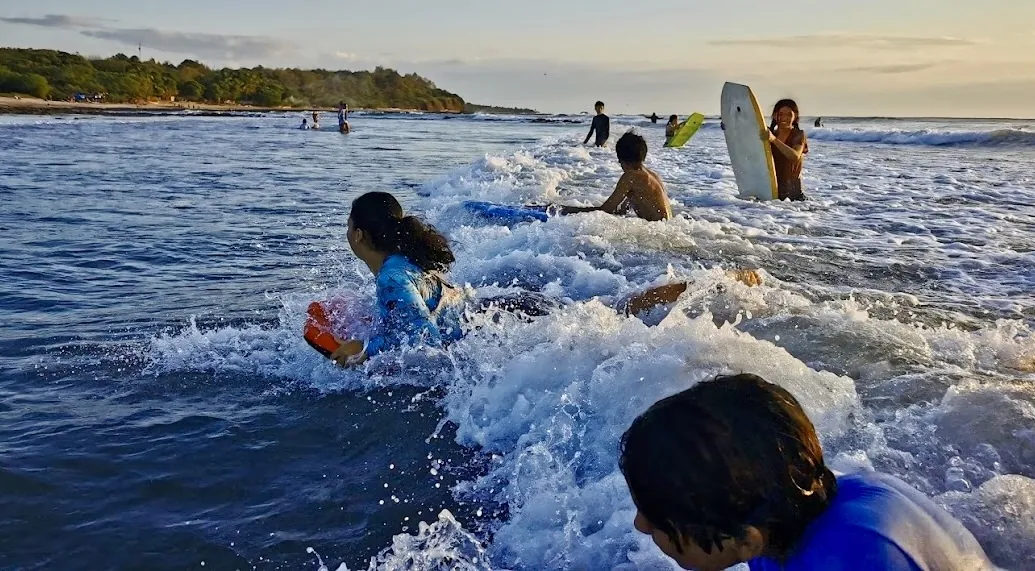
Costa Rica's Pacific beaches are beautiful and powerful. Rip currents are common, and many beaches have no lifeguards. Ocean drownings are one of the more serious risks for visitors, and they're largely preventable.
- Ask before you swim. Hosts, surf schools and locals know where the calmer water is and how the tide changes things.
- Learn to spot a rip: a darker, calmer-looking channel where waves aren't breaking, often carrying foam or sand out to sea.
- If you're caught, don't swim against it. Float, signal for help, and swim parallel to the beach until you're out of the current.
- Keep kids close and in the shallows, with an adult whose only job is watching the water.
Playa Avellanas, a three-minute walk from Johnny's Beach Bungalow, is a surf beach. That means waves and currents, especially on bigger days. The inside whitewater is where beginners learn, and a lesson with a qualified instructor is the safest way to start. Johnny's hosts can arrange one and tell you what the water is doing that day. Read more on their Playa Avellanas page.
Wildlife, health and drinking water
Wildlife
Most visitors see plenty of wildlife and none of it is a threat. Snakes exist but are rarely seen on maintained trails; wear closed shoes for hikes and use a flashlight on paths at night. Don't feed monkeys or coatis; it makes them bold around food and bags. Crocodiles live in some rivers and estuaries, so don't swim in river mouths unless locals say it's fine. (The Majestic Lodge's team answers a common question about crocodiles in Lake Arenal.)
Health and vaccines
No special vaccines are typically required for US travelers beyond routine ones, though requirements change and some apply if you arrive from certain other countries. Check the CDC's Costa Rica travel page and talk to your doctor, especially for infants, pregnant travelers and anyone with health conditions. Dengue is present, so mosquito repellent matters. Private hospitals in the larger towns are good; travel medical insurance that includes evacuation is worth having for a group with older relatives.
Can you drink the tap water?
In most of Costa Rica, yes: tap water is treated and generally safe, including in the main tourist areas. In some rural and beach communities supply can vary, so many visitors drink filtered or bottled water there. The simple rule: ask your host on arrival.
Volcanoes and earthquakes
Arenal has been in a resting phase since its long eruptive period ended in 2010, and Costa Rica's volcanoes are monitored. Small earthquakes happen; buildings are built for them. Neither is a reason to change plans.
Is Costa Rica safe for families, groups and solo travelers?
Traveling as a group is one of the simplest safety advantages there is. There's always someone to watch the bags, a van that never sits unattended, and enough people that nobody walks back alone at night. The risks that do exist mostly affect people who are alone, lost or in an empty parking lot.
Solo travelers, including women traveling alone, visit Costa Rica in large numbers. The usual advice applies more strongly: stick to well-reviewed lodging, use registered taxis or ride apps, and avoid isolated beaches after dark.
For families, the bigger day-to-day concerns are the ones every parent knows: sun, water, and keeping track of everyone. A place where the kids can roam freely is worth a lot.
How a private estate with on-site hosts helps
A whole-property rental changes the safety picture in practical ways. Nobody else is staying on the property. The pool, the gardens and the courts belong to your group, so children can move between houses and the pool without anyone worrying about strangers. Bella Vista is a gated mountaintop. At all three estates, the hosts live on site: Patricia and Felix at Bella Vista, Beto and Leidy at the Majestic Lodge, Alberto and Karla at Johnny's.
That matters more than any gate. Hosts who live there know which beach has a rip this week, which road is closed after the rain, which driver to call and which clinic to go to. They arrange the vans so your rental car isn't parked at a trailhead with everyone's bags in it. And when something goes wrong, there's a local who answers the door.



Ages 2 to 75, looked after.
“Our family of 13 stayed at Bella Vista for a week and enjoyed every day! Patricia cooked the most delicious dinners and breakfasts. The views were outstanding and the pool was the highlight for all ages 2 to 71.”
“This place is magical. We had three families stay together and there was plenty of room for all. The kids had a blast in the pool. But the magic of this place is in the people who take care of you.”
“We traveled all 16 of us, from age 3 to 75, for our renewal of vows, and we were blown away as Karla and her family hosted our event so beautifully. They even hosted a chess tournament and a bonfire for us at the beach.”
“Our family of eleven, aged 7 to 70, loved the property and its amenities. The infinity pool was a big hit and the porch offered a great place to watch the native wildlife. Patricia and Felix were onsite and very attentive.”
Safety questions from parents and organizers
Is Costa Rica safe for families with kids?
Yes. It's one of the most popular family destinations in the Americas. The everyday risks for kids are sun, heat and the ocean rather than crime: use plenty of sunscreen, keep them hydrated, and have an adult watching the water at all times on surf beaches.
What is the US travel advisory level for Costa Rica?
Levels change, so check the US State Department's Costa Rica page for the current level and any areas it flags. Read it when you book and again shortly before you travel.
What is the most common crime against tourists in Costa Rica?
Theft, especially from parked rental cars at beaches and trailheads, and bags left on the sand. Leave nothing in the car, take only what you need to the beach, and keep someone with the group's things.
Are Costa Rica's beaches safe to swim at?
Many are, but Pacific surf beaches often have rip currents and most have no lifeguards. Ask locals where it's calm, swim near others, keep kids in the shallows, and if you're caught in a rip, float and swim parallel to shore.
Do I need vaccines to travel to Costa Rica?
Typically not, beyond routine vaccines for US travelers. Some requirements depend on where you're arriving from, and recommendations change, so check the CDC's Costa Rica page and ask your doctor.
Is it safe to drink the tap water in Costa Rica?
In most of the country, yes. In some rural and beach areas many people prefer filtered or bottled water. Ask your host when you arrive.
Is a private rental safer than a hotel for a group?
It removes some common risks: there are no other guests on the property, everyone's belongings stay in one place, and at our estates the hosts live on site and arrange drivers, so cars aren't left at trailheads. Use the same common sense when you're out exploring.
 Plan with people who live there
Bring the whole family. We'll look after the details.
Tell us who's coming, from toddlers to grandparents, and we'll suggest the estate and route that fits, with drivers for every leg.